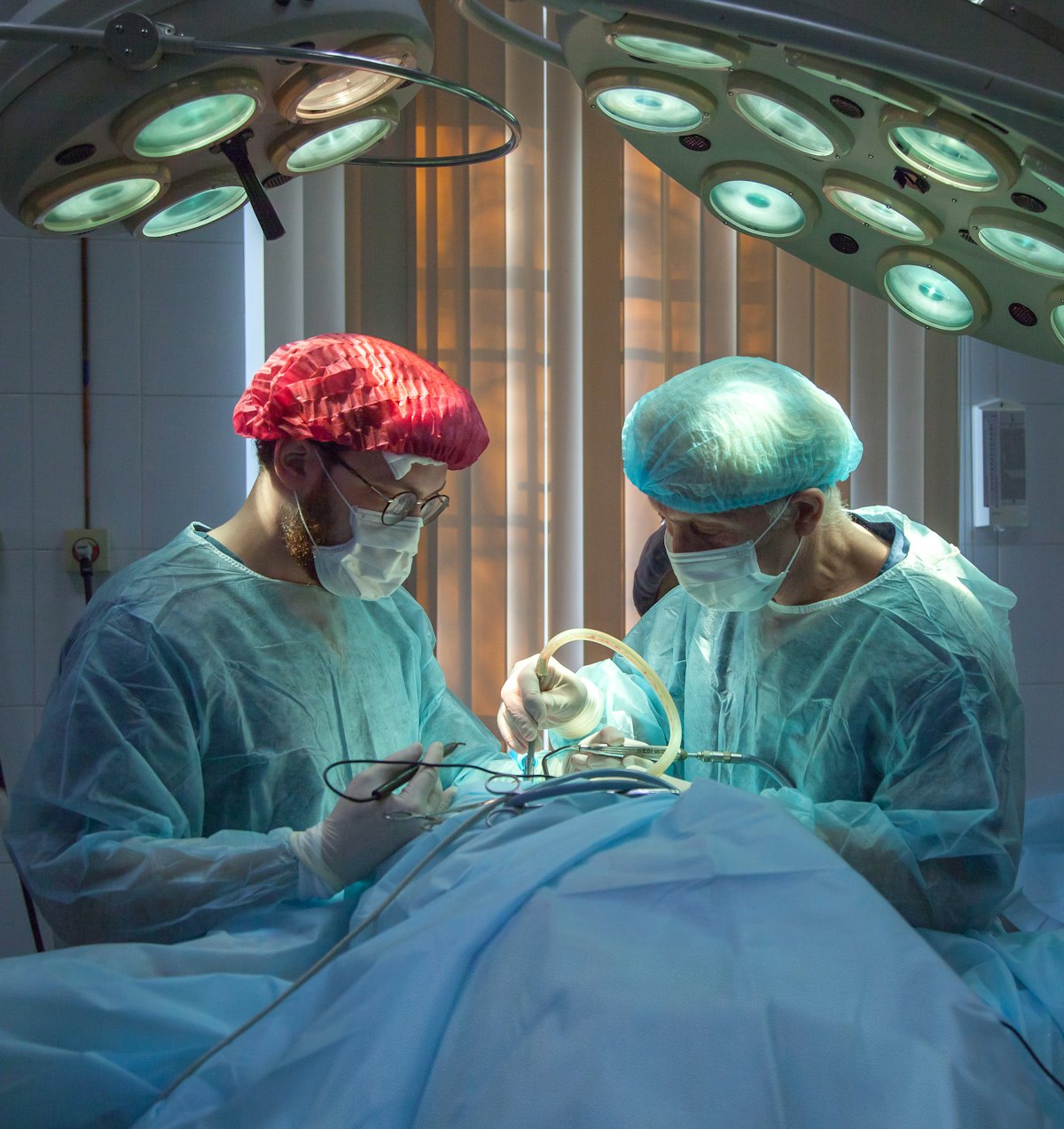
Video-Assisted Thoracoscopic Surgery (VATS) uses 2-3 keyhole incisions, a high-definition camera and specialised instruments, replacing traditional open thoracotomy for many patients. Recovery is dramatically faster, scarring is minimal and oncological outcomes remain excellent.
What is VATS?
Video-Assisted Thoracoscopic Surgery (VATS) is a minimally invasive technique in which the surgeon operates through two or three small keyhole cuts in the chest wall, using a high-definition camera (thoracoscope) and purpose-built instruments. Because the ribcage is not spread open, there is far less tissue trauma, pain and scarring than with a traditional thoracotomy.
Why patients choose VATS
Most patients are discharged within 3-5 days, return to light activity in about 2 weeks and report significantly less post-operative pain compared to open surgery. Blood loss is lower, chest drains come out sooner and the cosmetic result is far better - important for younger patients.
Procedures done by VATS
VATS is now the gold standard for lung lobectomy, wedge resection, pleural biopsy, bullectomy, sympathectomy (for hyperhidrosis), thymectomy and many mediastinal procedures. At ChestExperts, Dr Ahmad Ali tailors the approach - uniportal (single incision) or triportal - to the patient's anatomy and disease.
What recovery feels like
You typically begin breathing exercises and gentle walking on day 1. The chest drain is usually removed within 2-4 days, and most patients go home within a week. Heavy lifting and driving are avoided for about 6 weeks while the chest wall heals.