Thymectomy (Thymoma & Myasthenia Gravis)
The thymus gland sits behind the breastbone and can grow tumours or drive the muscle weakness of myasthenia gravis. Removing it - through keyhole or the chest midline - brings relief in both diseases.

The thymus and the diseases it causes
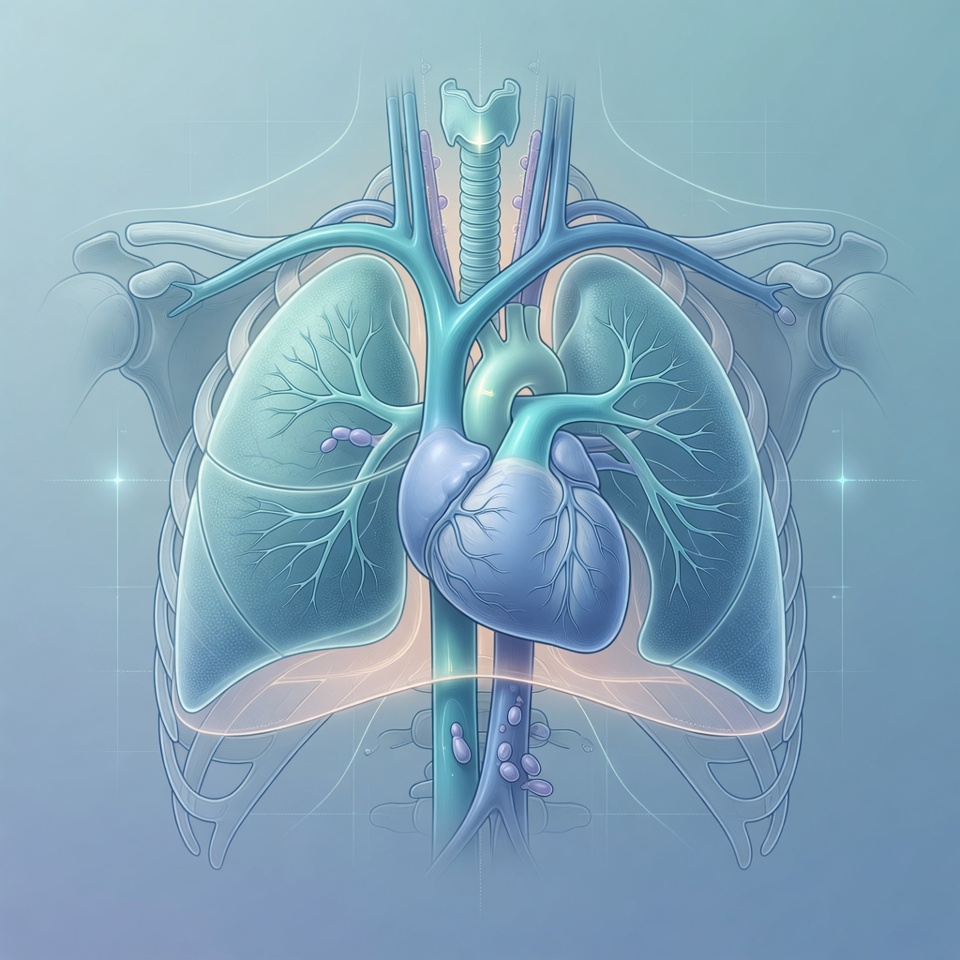
The thymus is a small gland in front of the heart. In adults it often shrinks, but it can enlarge into a tumour (thymoma) or misbehave and trigger myasthenia gravis - a disease of muscle weakness.
Surgical removal of the entire gland - thymectomy - is the cornerstone for thymoma and helps many patients with myasthenia gravis dramatically, often reducing or stopping their medicines.
The modern approach is VATS thymectomy, done through three small cuts, or a partial sternotomy through a short midline incision for larger tumours. Both give excellent, proven results.
The different forms
Thymoma
A tumour of the gland - removal with its capsule is the standard cure.
Thymic cyst
Usually harmless, but removal confirms safety and prevents complications.
Myasthenia gravis
Muscle weakness of eyes, chewing and limbs - thymectomy improves most patients.
Thymic hyperplasia
An overgrown gland driving autoimmunity - removal helps control the disease.
Watch real cases from our operating theatre
Dr Ahmad Ali explains the condition and surgery in simple words.
How you know you have it
Typical symptoms
- Drooping eyelids or double vision
- Difficulty chewing, swallowing or speaking
- Muscle weakness that tires with the day
- Cough or chest discomfort from a mediastinal mass
When to seek help urgently
- Sudden severe breathing difficulty
- Choking while swallowing
How it is confirmed
CT Chest
Shows the gland and any mass behind the breastbone.
MRI
Clearer detail of a suspected tumour and its neighbours.
Neurology Tests
Electromyography and blood antibodies confirm myasthenia when suspected.
Biopsy
For larger masses, a sample is first taken to confirm the diagnosis.
The procedures Dr Ahmad Ali performs
Gland and tumour are removed completely - the technique fits the case, not the other way around.
VATS Thymectomy
- What it is — The entire gland is removed through 3 small side cuts with a camera.
- Eligibility — Myasthenia gravis and small thymic masses.
- Stay — 2-3 days.
- Recovery — Fast, less painful - many patients reduce medicines within months.
Partial Sternotomy & Thymectomy
- What it is — A short midline cut gives complete access for larger tumours, and the gland is removed en bloc.
- Eligibility — Bigger thymomas or involvement of nearby structures.
- Stay — 4-6 days.
- Recovery — Bone heals over 4-6 weeks; activity builds gradually.
Benefits of treatment at ChestExperts
Tumour cured
Complete removal of a thymoma gives excellent long-term outcomes.
Myasthenia improves
Most patients need less medication, and many reach remission.
Keyhole first
VATS means tiny scars and a much lighter recovery.
Open when needed
Bigger disease gets the thorough, safe exposure it requires.
A joint plan
Neurologists and surgeon work together for myasthenia patients.
Long-term follow-up
Structured reviews track your improvement and you are never alone.
Thoracic & Chest Surgeon
Meet Dr Ahmad Ali
Specialist thoracic and chest surgeon at Hameed Latif Hospital, Lahore - focused on minimal-pain, minimal-stay surgery, including for Thymectomy (Thymoma & Myasthenia Gravis).
Dr Ahmad Ali treats every patient as his own. He first understands the problem completely - your symptoms, your scan and your daily life - before recommending anything. He explains each step simply, in Urdu or English, and never pushes a procedure that is not truly needed.
How he can help with Thymectomy (Thymoma & Myasthenia Gravis): He confirms the exact diagnosis, then chooses the least invasive option that is genuinely safe for your stage and performs it with precision, so your recovery is smooth. For most cases, the procedure Dr Ahmad Ali performs here is VATS Thymectomy while more advanced disease is handled with Partial Sternotomy & Thymectomy.
Bring your reports - he tells you what they really mean, in simple words.
Only the tests that are genuinely needed are ordered - no extra burden.
The safest option for your exact stage, with clear and transparent cost.
The procedure, then careful follow-up until you are fully recovered.
Frequently Asked Questions
What is Thymectomy?
What are the symptoms of Thymectomy?
How is Thymectomy diagnosed?
How is Thymectomy treated?
What are the benefits of treatment at ChestExperts?
How do I book a consultation at ChestExperts?
You may also want to know about
Muscle weakness that will not settle?
Let us check the thymus as a possible driver - for many patients the answer starts here.