Pneumothorax (Collapsed Lung)
A pneumothorax means air has collected around your lung, pushing it off the chest wall like a punctured tyre. If left untreated it can collapse the lung further and become an emergency.

What is a pneumothorax?
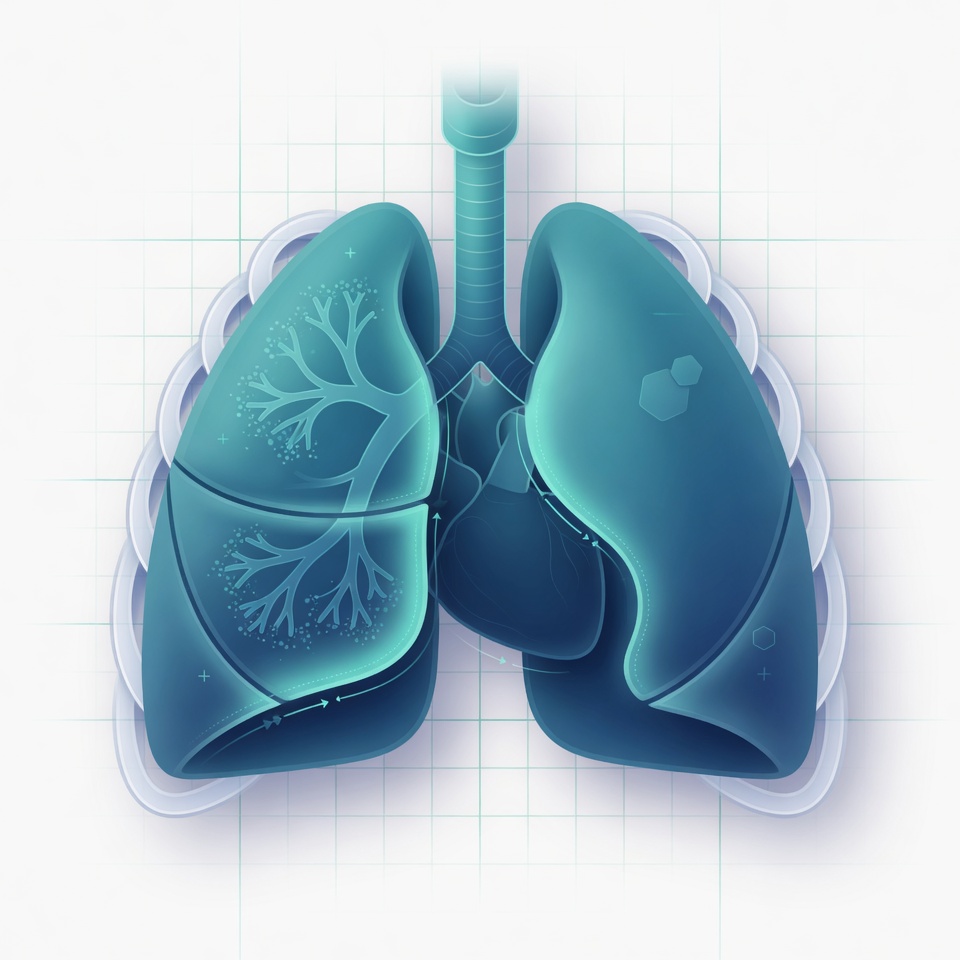
Your lung sits inside a thin lining (pleura) like a balloon inside a bag. Normally the space between them is empty. When it fills with air, the lung loses its grip on the chest wall and collapses.
The air usually gets in after a chest injury, a puncture (like a central line or a bullet), an air bubble that bursts on the surface of the lung (bleb or bulla), or suddenly without any reason - this is called a spontaneous pneumothorax.
A small collapse may heal on its own with rest and oxygen. A large or recurrent collapse needs the air drained, and if it keeps coming back, the leaking blebs are sealed surgically so it never happens again.
It is more common in tall, thin young men and in smokers. If you ignore the breathlessness, a full collapse can turn into a life-threatening tension pneumothorax where the pressure pushes your heart to one side.
The different forms
Spontaneous pneumothorax
Appears out of nowhere, usually after a ruptured air sac. Common in young, tall, thin males and smokers.
Traumatic pneumothorax
Caused by a rib fracture, stab wound, or a mishap during a medical procedure that lets air in.
Tension pneumothorax
The dangerous form. Air keeps entering but cannot escape, pushing the heart and making it a medical emergency.
Recurrent pneumothorax
When it keeps returning on the same side. Surgery seals the blebs and puts the lung back permanently.
Watch real cases from our operating theatre
Dr Ahmad Ali explains the condition and surgery in simple words.
How you know you have it
Typical symptoms
- Sudden sharp chest pain that worsens on breathing
- Shortness of breath that does not settle
- Pain may spread to the shoulder or back
- Dry cough, low energy, or feeling like your chest is tight
When to seek help urgently
- Severe breathlessness at rest
- Bluish lips or face
- Rapid heartbeat with cold sweat
- Chest pain that comes with dizziness or fainting
How it is confirmed
Chest X-Ray
The quickest test - a clear picture normally shows how much the lung has collapsed.
CT Scan Chest
Shows smaller or hidden air collections and finds the blebs or bullae that cause repeats.
Ultrasound (Bedside)
Fast, painless scan used in the emergency to confirm air before draining.
Blood Oxygen Check
A pulse oximeter tells us how well your lungs are supplying oxygen.
The procedures Dr Ahmad Ali performs
From an emergency drain to advanced keyhole surgery, the right option is chosen for your exact situation.
Tube Thoracostomy (Chest Drain)
- What it is — A small tube is placed between the ribs to let the trapped air escape and the lung re-expand.
- Eligibility — First episode or a large collapse - most patients need no surgery at all.
- Stay — Usually a day-care stay; the lung heals as the drain works.
- Recovery — The tube stays 1-3 days; you go home once the lung is firmly back in place.
VATS Bullectomy + Pleurodesis
- What it is — Through 2-3 small cuts, the leaking blebs are sealed and the lung is stuck back to the chest wall so air cannot collect again.
- Eligibility — Recurrent collapses, a persistent air leak, or dangerous work/travel risk in patients.
- Stay — Usually 2-3 days in a regular ward, sometimes overnight only.
- Recovery — Back to light work within a week and full activity within 3-4 weeks.
Benefits of treatment at ChestExperts
Many cases need no knife
A simple chest drain resolves the majority of first-time collapses - surgery is reserved for recurrence.
Keyhole when needed
VATS means 2-3 small cuts, little pain and a much faster return to work.
Stops recurrence
The bullectomy seals the cause, not just the symptom - the lung stays up for good.
Short hospital stay
Most patients go home in 1-3 days, back to daily life in a week.
Flying & travel safe
After full healing you can fly again - Dr Ahmad explains exactly when it is safe.
Clear, honest pricing
You understand the plan and cost before anything is done, on WhatsApp if you wish.
Thoracic & Chest Surgeon
Meet Dr Ahmad Ali
Specialist thoracic and chest surgeon at Hameed Latif Hospital, Lahore - focused on minimal-pain, minimal-stay surgery, including for Pneumothorax (Collapsed Lung).
Dr Ahmad Ali treats every patient as his own. He first understands the problem completely - your symptoms, your scan and your daily life - before recommending anything. He explains each step simply, in Urdu or English, and never pushes a procedure that is not truly needed.
How he can help with Pneumothorax (Collapsed Lung): He confirms the exact diagnosis, then chooses the least invasive option that is genuinely safe for your stage and performs it with precision, so your recovery is smooth. For most cases, the procedure Dr Ahmad Ali performs here is Tube Thoracostomy (Chest Drain) while more advanced disease is handled with VATS Bullectomy + Pleurodesis.
Bring your reports - he tells you what they really mean, in simple words.
Only the tests that are genuinely needed are ordered - no extra burden.
The safest option for your exact stage, with clear and transparent cost.
The procedure, then careful follow-up until you are fully recovered.
Frequently Asked Questions
What is Pneumothorax?
What are the symptoms of Pneumothorax?
How is Pneumothorax diagnosed?
How is Pneumothorax treated?
What are the benefits of treatment at ChestExperts?
How do I book a consultation at ChestExperts?
You may also want to know about
Sudden chest pain? Do not ignore it
A collapsed lung is simple to fix if treated early. Call today and let us help you breathe easy again.