
Thoracic Outlet Syndrome (Cervical Rib)
In some people an extra rib or a tight muscle at the base of the neck squeezes the nerves and blood vessels to the arm. The result: numb fingers, a weak grip, or a bluish cold hand.

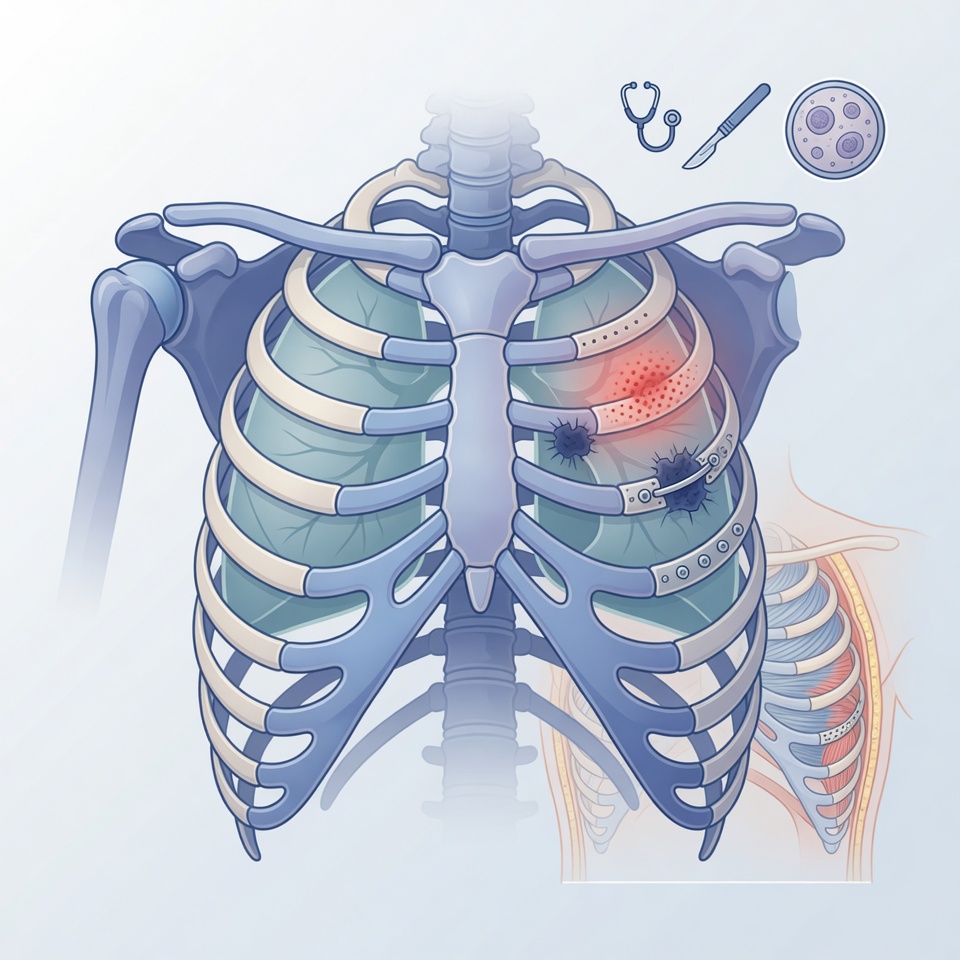
What thoracic outlet syndrome is
Between the neck and the armpit there is a narrow corridor (the thoracic outlet) through which the nerves and artery to your arm pass. When the corridor gets tight, they get compressed.
The usual culprit is a cervical rib - an extra rib present from birth in about 1% of people - or a tight muscle band. Symptoms typically appear in women in the 20s-40s and can be disabling: numbness down the arm, weak grip, pain overhead.
When physiotherapy and posture advice fail, removing the extra rib and muscle band decompresses the nerves completely. The relief is often immediate and permanent.
The different forms
Cervical rib (bony)
An actual extra rib pressing on the nerves - surgery cures this form very reliably.
Muscle-band type
A tight fibrous band in the scalene muscles - divided and released in surgery.
Vascular type
The artery or vein also squeezed, causing a cold or swollen arm.
Postural/latent
Mild compression with posture - often improved by physiotherapy first.
Watch real cases from our operating theatre
Dr Ahmad Ali explains the condition and surgery in simple words.
How you know you have it
Typical symptoms
- Numbness or tingling in the little and ring fingers
- Aching from neck to hand, worse overhead or carrying
- Weakening grip and easy arm tiredness
- Cold, pale or bluish hand and fingers
When to seek help urgently
- Sudden swelling of the whole arm (possible vein clot)
- Severe pain with a cold white hand
How it is confirmed
Clinical Tests
The upright position and arm movements that reproduce your symptoms are reproduced exactly in the clinic.
X-Ray Neck
The giveaway - it shows the extra cervical rib clearly.
Nerve Conduction Study
Confirms the compression point along the course of the nerve.
Doppler / CT Angiography
Shows compression of the artery or vein when the arm is raised.
The procedure Dr Ahmad Ali performs
The neck is decompressed cleanly and safely - freeing the arm for good.
Cervical Rib Excision
- What it is — Through a small neck incision, the extra rib and any tight fibrous band are removed, freeing the nerves and vessels.
- Eligibility — Confirmed bony or band compression with symptoms not improving on physiotherapy.
- Stay — 2-3 days.
- Recovery — Most numbness lifts early; strength returns over weeks with physiotherapy.
Benefits of treatment at ChestExperts
Immediate relief
Freed nerves often stop aching and tingling from the very first week.
Small, neat scar
The incision sits in a natural neck crease and heals discreetly.
Grip strength returns
Physiotherapy rebuilds the arm once the nerve is free.
Lasts for life
Removal of the rib means the compression cannot quietly return.
Correct diagnosis first
We confirm the exact type before ever planning surgery.
Short stay
Most patients leave within 2-3 days.
Thoracic & Chest Surgeon
Meet Dr Ahmad Ali
Specialist thoracic and chest surgeon at Hameed Latif Hospital, Lahore - focused on minimal-pain, minimal-stay surgery, including for Thoracic Outlet Syndrome (Cervical Rib).
Dr Ahmad Ali treats every patient as his own. He first understands the problem completely - your symptoms, your scan and your daily life - before recommending anything. He explains each step simply, in Urdu or English, and never pushes a procedure that is not truly needed.
How he can help with Thoracic Outlet Syndrome (Cervical Rib): He confirms the exact diagnosis, then chooses the least invasive option that is genuinely safe for your stage and performs it with precision, so your recovery is smooth. For most cases, the procedure Dr Ahmad Ali performs here is Cervical Rib Excision.
Bring your reports - he tells you what they really mean, in simple words.
Only the tests that are genuinely needed are ordered - no extra burden.
The safest option for your exact stage, with clear and transparent cost.
The procedure, then careful follow-up until you are fully recovered.
Frequently Asked Questions
What is Cervical Rib / TOS?
What are the symptoms of Cervical Rib / TOS?
How is Cervical Rib / TOS diagnosed?
How is Cervical Rib / TOS treated?
What are the benefits of treatment at ChestExperts?
How do I book a consultation at ChestExperts?
You may also want to know about
Numb fingers and a weak grip?
If tests show a cervical rib is the cause, relief may be one small procedure away.