
Tracheal Stenosis (Narrow Windpipe)
When the windpipe narrows after a breathing tube, trauma or disease, even walking can feel like an effort. Toyota repairs restore the airway by removing the scarred section - and breathing becomes easy again.

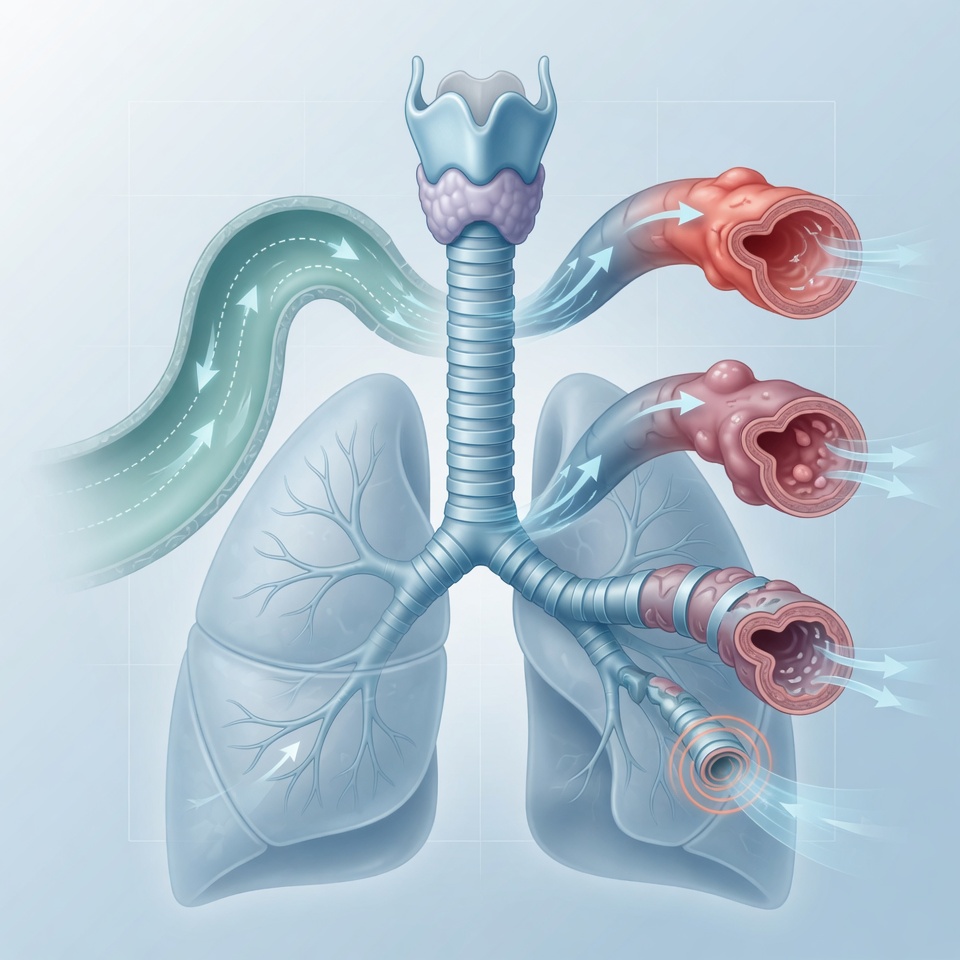
Why the windpipe narrows
The windpipe keeps its airway open with stiff C-shaped rings. If it is scarred - most commonly after a prolonged ICU breathing tube, an injury or infection - the airway closes down.
Patients describe a whistling breath, cough after exertion, and a frightening feeling of choking that grows over months. Dilatation and stents give only temporary relief.
The lasting solution is tracheal resection: the scarred segment is cut out and the healthy ends joined back perfectly. Done by an experienced unit, most patients breathe deeply without any aid within weeks.
The different forms
Post-intubation
The most common cause - scarring where the breathing tube pressed during ICU care.
Post-trauma
Old neck/chest injury healing into a narrowed airway.
Post-infection / TB
Inflammation heals with scar tissue that closes the tube.
Tumour of the windpipe
A growth narrowing the lumen - resected for cure.
Watch real cases from our operating theatre
Dr Ahmad Ali explains the condition and surgery in simple words.
How you know you have it
Typical symptoms
- Noisy breathing, especially on effort
- Shortness of breath that worsens
- Cough that will not settle
- Feeling of a closing throat when lying down
When to seek help urgently
- Severe difficulty breathing
- Bluish lips from low oxygen
How it is confirmed
Bronchoscopy
Seeing the narrowing directly and measuring its length - the key test.
CT Scan Trachea
Maps the exact level, length and thickness of the scar.
Breathing Tests
Shows the classic obstruction pattern of a narrowed airway.
The procedure Dr Ahmad Ali performs
The scar comes out, the airway gets a perfect join - and breathing has its normal width again.
Tracheal Resection & Anastomosis
- What it is — The scarred segment is cut out through a neck (or chest) approach and the healthy parts are joined end-to-end with perfect stitches.
- Eligibility — Focal post-intubation, post-trauma or tumour narrowing of the windpipe.
- Stay — 4-6 days with a chin-down rest protocol.
- Recovery — Breathing is clearly freer within days; normal activity in 4-6 weeks.
Benefits of treatment at ChestExperts
Breathing truly restored
The airway is made wide again - no stents, no repeated procedures.
Lasting cure
End-to-end repair heals solid; the narrowing rarely returns.
A neat neck approach
When possible the whole procedure is through a single neck crease scar.
Off the oxygen
Many patients stop needing support they lived with for months.
Designed care
The chin-rest protocol protects the fresh join during healing.
Expert airway team
Anaesthesia and surgery are planned jointly for maximum safety.
Thoracic & Chest Surgeon
Meet Dr Ahmad Ali
Specialist thoracic and chest surgeon at Hameed Latif Hospital, Lahore - focused on minimal-pain, minimal-stay surgery, including for Tracheal Stenosis (Narrow Windpipe).
Dr Ahmad Ali treats every patient as his own. He first understands the problem completely - your symptoms, your scan and your daily life - before recommending anything. He explains each step simply, in Urdu or English, and never pushes a procedure that is not truly needed.
How he can help with Tracheal Stenosis (Narrow Windpipe): He confirms the exact diagnosis, then chooses the least invasive option that is genuinely safe for your stage and performs it with precision, so your recovery is smooth. For most cases, the procedure Dr Ahmad Ali performs here is Tracheal Resection & Anastomosis.
Bring your reports - he tells you what they really mean, in simple words.
Only the tests that are genuinely needed are ordered - no extra burden.
The safest option for your exact stage, with clear and transparent cost.
The procedure, then careful follow-up until you are fully recovered.
Frequently Asked Questions
What is Tracheal Stenosis?
What are the symptoms of Tracheal Stenosis?
How is Tracheal Stenosis diagnosed?
How is Tracheal Stenosis treated?
What are the benefits of treatment at ChestExperts?
How do I book a consultation at ChestExperts?
You may also want to know about
Noisy or difficult breathing after an ICU stay?
The windpipe may be scarred - and that is very often fixable. Come for a scope and a plan.