
Achalasia (Food Pipe Valve Release)
In achalasia, the valve at the bottom of your food pipe will not relax. Food gets stuck, the pipe balloons above it, and swallowing becomes exhausting. One precise keyhole cut on that muscle gives normal swallowing back.

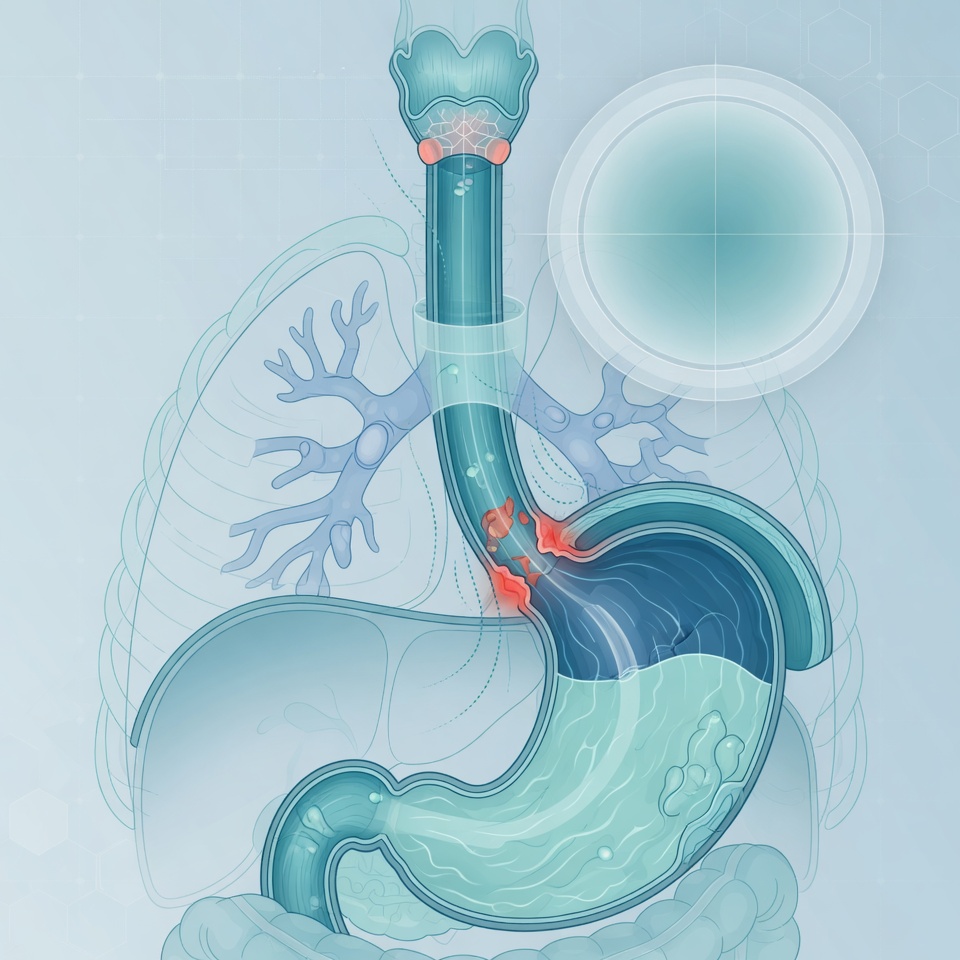
What achalasia is
At the base of the food pipe sits a muscular valve that must relax to let food pass. In achalasia the nerve supply fails, so the valve stays shut and the food pipe above it slowly stretches.
The result is the classic story: trouble swallowing solids and then liquids, regurgitation at night, chest pain and weight loss - sometimes mistaken for acid reflux for years.
The treatment that lasts is the myotomy, in which the tight valve muscle is cut lengthwise so food falls through freely. Balloon dilation gives only temporary relief. Done through keyhole cuts, patients are home in a day or two eating normally.
The different forms
Classic achalasia
Valve spasm with a ballooned food pipe - the ideal case for myotomy.
Vigorous achalasia
Spasmy and painful form - myotomy relieves both the sticking and the pain.
Advanced / sigmoid pipe
A hugely stretched pipe may need an additional straightening step.
After failed dilation
Patients who got only temporary relief from balloons do very well with surgery.
Watch real cases from our operating theatre
Dr Ahmad Ali explains the condition and surgery in simple words.
How you know you have it
Typical symptoms
- Difficulty swallowing both solids and liquids
- Food and saliva rising up at night
- Chest pain or a heavy feeling behind the breastbone
- Gradual weight loss from poor eating
When to seek help urgently
- Complete inability to swallow even water
- Coughing aspirated food at night
How it is confirmed
Barium Swallow
The classic bird-beak appearance of the tight valve and the dilated pipe above.
Endoscopy
Rules out cancer or stricture as the cause of the block.
Manometry
The gold standard - proves the valve does not relax and gives the diagnosis.
CT Chest
Useful in advanced cases to see how stretched the pipe is.
The procedures Dr Ahmad Ali performs
One clean cut on the valve muscle - the whole disease is corrected at its source.
Laparoscopic Heller Myotomy (+ Fundoplication)
- What it is — Through tiny belly cuts, the tight valve muscle is divided lengthwise and a loose anti-reflux wrap is built so acid does not cause reflux afterwards.
- Eligibility — Confirmed achalasia of any grade - the gold-standard treatment.
- Stay — 1-2 days.
- Recovery — Soft food same week; normal meals within weeks - swallowing is restored fast.
Open Heller Myotomy
- What it is — The same muscle release through a chest or belly incision, when keyhole access is unsafe.
- Eligibility — Previous surgery in the area or anatomical reasons.
- Stay — 3-5 days.
- Recovery — Slightly longer recovery, same lasting result.
Benefits of treatment at ChestExperts
Swallowing restored
Food falls through freely after a single precise cut - the improvement is immediate.
Lasting cure
Myotomy treats the cause, unlike balloons that re-block within months.
Keyhole recovery
Tiny cuts, a day or two in hospital, eating again quickly.
No reflux trade-off
The anti-reflux wrap protects your food pipe while the valve is opened.
Weight and energy return
Eating properly brings strength and weight back within weeks.
Diagnosis done right
Manometry-based diagnosis means the right operation for the right patient.
Thoracic & Chest Surgeon
Meet Dr Ahmad Ali
Specialist thoracic and chest surgeon at Hameed Latif Hospital, Lahore - focused on minimal-pain, minimal-stay surgery, including for Achalasia (Food Pipe Valve Release).
Dr Ahmad Ali treats every patient as his own. He first understands the problem completely - your symptoms, your scan and your daily life - before recommending anything. He explains each step simply, in Urdu or English, and never pushes a procedure that is not truly needed.
How he can help with Achalasia (Food Pipe Valve Release): He confirms the exact diagnosis, then chooses the least invasive option that is genuinely safe for your stage and performs it with precision, so your recovery is smooth. For most cases, the procedure Dr Ahmad Ali performs here is Laparoscopic Heller Myotomy (+ Fundoplication) while more advanced disease is handled with Open Heller Myotomy.
Bring your reports - he tells you what they really mean, in simple words.
Only the tests that are genuinely needed are ordered - no extra burden.
The safest option for your exact stage, with clear and transparent cost.
The procedure, then careful follow-up until you are fully recovered.
Frequently Asked Questions
What is Achalasia?
What are the symptoms of Achalasia?
How is Achalasia diagnosed?
How is Achalasia treated?
What are the benefits of treatment at ChestExperts?
How do I book a consultation at ChestExperts?
You may also want to know about
Food sticking even when swallowed slowly?
This may be achalasia, not acidity. A quick manometry test and a keyhole fix can set swallowing right.