
Zenkers Diverticulum (Throat Pouch)
A Zenker pouch is a small pocket that forms where the throat meets the food pipe. Food collects there, comes back up, and causes the cough, smell and choking many older people quietly live with.

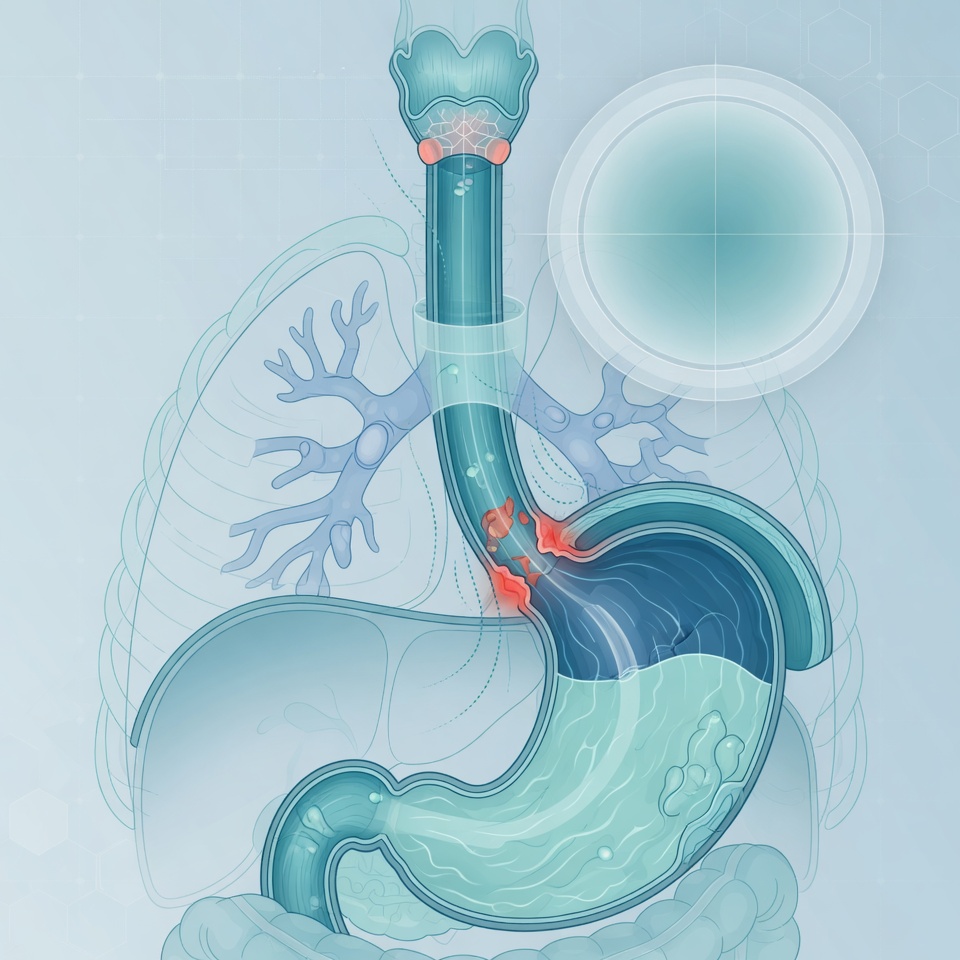
What a Zenkers pouch is
High in the throat, a weak spot can balloon out under swallowing pressure and form a pouch. It overlaps the entrance to the food pipe and traps food and mucus.
People carry it for years: food sticking high in the neck, coughing at mealtimes, bad breath, and occasionally feeling suffocated at night as trapped food spills back.
The cure is surgical - joining the pouch with the food-pipe muscle (diverticulectomy, often combined with dividing the tight muscle) so food flows straight down. Modern approaches are quick with small incisions and a short stay.
The different forms
Early pouch
Small sac - mild sticking and throat clearing; worth treating early.
Established pouch
Food catches, returns, and coughing at meals is constant - surgery is clearly indicated.
Pouch with spasm
A tight muscle below the pouch - both are treated in the same operation.
Aspiration risk
Trapped food spilling into the windpipe - a serious but fully preventable risk.
Watch real cases from our operating theatre
Dr Ahmad Ali explains the condition and surgery in simple words.
How you know you have it
Typical symptoms
- Trouble swallowing at the level of the throat
- Food returning hours after meals
- Coughing during meals
- Bad breath and throat clearing
When to seek help urgently
- Repeated choking, especially at night
- Coughing up food while sleeping
- Frequent pneumonia
How it is confirmed
Barium Swallow
The classic test - shows the pouch filling behind the food pipe.
Endoscopy
Inspects the throat entrance and confirms the size of the pouch.
Video Swallow (if needed)
Checks whether food is spilling into the windpipe.
The procedure Dr Ahmad Ali performs
Pouch removed and muscle released in one sitting - eating becomes effortless again.
Diverticulectomy (with Cricopharyngeal Myotomy)
- What it is — The pouch is removed and the tight throat muscle released through a small neck incision, so swallowing pressure stops rebuilding the pouch.
- Eligibility — Every symptomatic Zenker pouch - the definitive treatment.
- Stay — 1-2 days.
- Recovery — Soft food for a short time, then normal meals; the high cough and smell disappear.
Benefits of treatment at ChestExperts
Swallowing cleared
Food goes straight down - no more sticking high in the throat.
Choking risk gone
No pouch means nothing left to spill into the windpipe at night.
Cough and smell end
The constant clearing, bad breath and meal-time coughs stop.
Keyhole, quick stay
A small incision, a day or two in hospital, fast recovery.
Muscle fixed too
Releasing the tight muscle stops the pouch from silently re-forming.
Safe for older patients
Planned and careful, the procedure suits precisely the age group it mostly affects.
Thoracic & Chest Surgeon
Meet Dr Ahmad Ali
Specialist thoracic and chest surgeon at Hameed Latif Hospital, Lahore - focused on minimal-pain, minimal-stay surgery, including for Zenkers Diverticulum (Throat Pouch).
Dr Ahmad Ali treats every patient as his own. He first understands the problem completely - your symptoms, your scan and your daily life - before recommending anything. He explains each step simply, in Urdu or English, and never pushes a procedure that is not truly needed.
How he can help with Zenkers Diverticulum (Throat Pouch): He confirms the exact diagnosis, then chooses the least invasive option that is genuinely safe for your stage and performs it with precision, so your recovery is smooth. For most cases, the procedure Dr Ahmad Ali performs here is Diverticulectomy (with Cricopharyngeal Myotomy).
Bring your reports - he tells you what they really mean, in simple words.
Only the tests that are genuinely needed are ordered - no extra burden.
The safest option for your exact stage, with clear and transparent cost.
The procedure, then careful follow-up until you are fully recovered.
Frequently Asked Questions
What is Zenkers Pouch?
What are the symptoms of Zenkers Pouch?
How is Zenkers Pouch diagnosed?
How is Zenkers Pouch treated?
What are the benefits of treatment at ChestExperts?
How do I book a consultation at ChestExperts?
You may also want to know about
Food catching at the top of your throat?
Dont accept choking at meals as normal ageing. A single keyhole procedure can end it.